


Editorial Note
This page is published by Kinetics Brace. This story is a dramatization of a common experience with shoulder pain and sleep, and it is general information only. It is not medical advice and does not replace a visit to your own doctor.
Delivery is two to seven days after dispatch. Returns and exchanges are subject to the conditions in Kinetics' returns policy.
The customer reviews quoted here are real, but every shoulder is different and results vary from person to person.
KINETICS COMPRESSION SHOULDER BRACE
30-DAY GUARANTEE · FAST FREE SHIPPING
Kinetics Compression Shoulder Brace · On sale now + free shipping
Home > Health > Pain & Sleep > Shoulder Pain at Night
Why so many of us wake up at 3AM with shoulder pain, and the simple change that finally let me sleep through the night
For eight months my shoulder woke me up at 3AM, and I told myself that's just what 43 feels like. Then my buddy Mike told me over pancakes that the problem wasn't my pillow. Now the brace he told me about hangs on my bedpost, and most nights I sleep straight through.

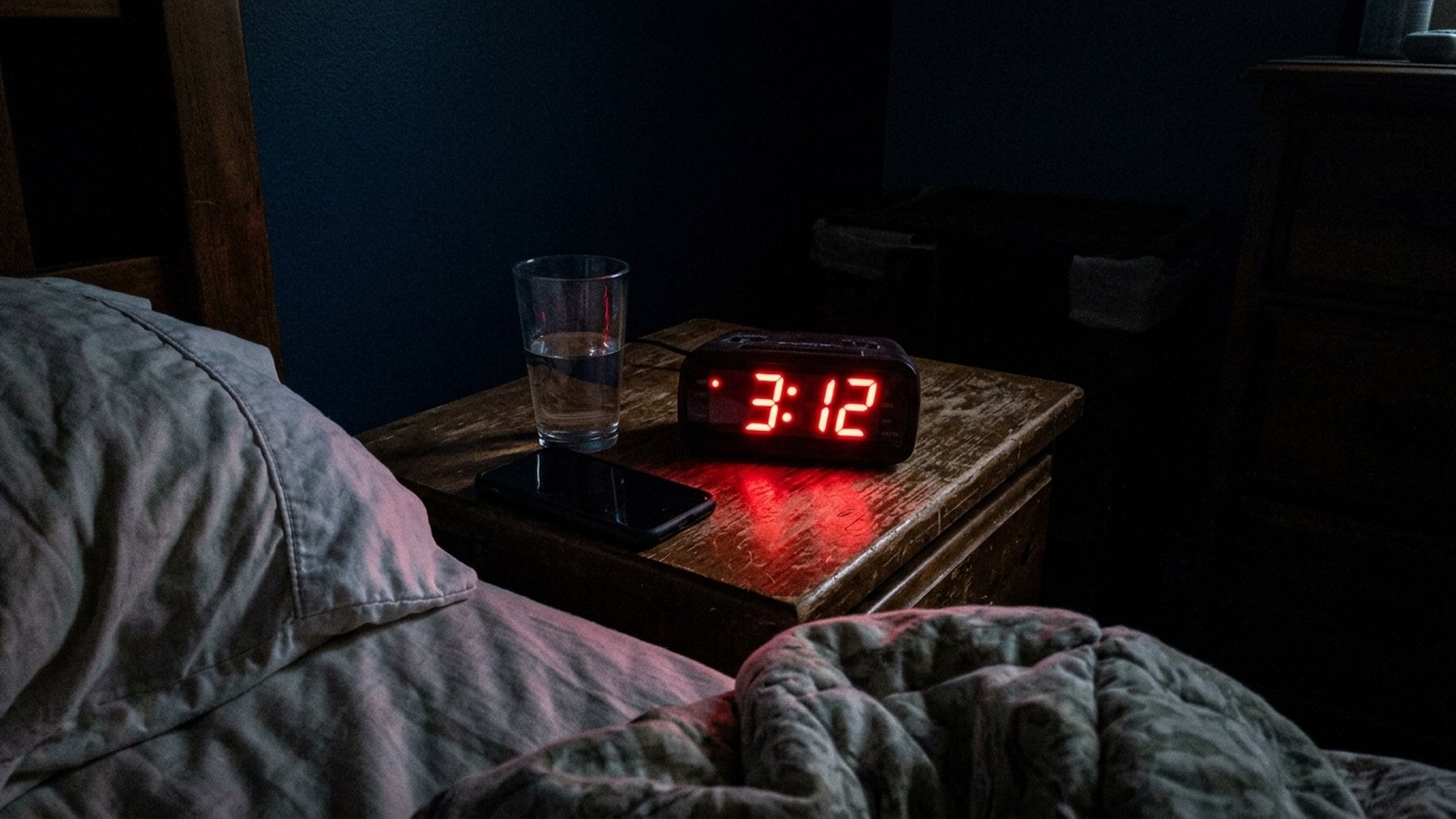
I can tell you the exact moment I stopped pretending it was fine. It was 3:07 on a Tuesday, I was sitting on the edge of the bed holding my right shoulder, and I was doing the math: if I fell asleep right now, I'd get three hours and twenty minutes.
It hadn't always been like this. I coach my son's baseball team, and I've thrown batting practice every spring for eleven years. Last fall the shoulder started aching after practice. By winter it wasn't practice that hurt. It was the nights.
I finally booked an appointment, half expecting to hear the word surgery. My doctor pressed around the joint, had me lift my arm a few different ways and said it was probably wear in the rotator cuff, very common at my age. The plan was rest, ice, ibuprofen, some stretches, physical therapy if it didn't settle down, and come back in a few months.
So that's what I did. Rested it, iced it, took the pills. And every night around 3AM I was awake again, shuffling from my side to my back to my stomach, looking for a position that didn't hurt.
Everything else started to slide. I was groggy by ten, on my third coffee by two, and short with the kids over nothing. Jen, my wife, started sleeping with a pillow over her head. I kept telling myself this was just getting older, but I wanted my nights back more than anything.
Then I met Mike for breakfast after Saturday practice. We've been friends since high school. He's an electrician, so he spends half his day with his arms over his head, and he has tried just about everything for a sore shoulder. He took one look at me across the booth and asked what was going on.
"Dan, you look like you slept in your truck," he said, sliding the syrup over and waiting me out.
I told him about the 3AM wake-ups, and it came out more tired than I meant it to.
"Doc says it's wear and tear. Rest it, ice it, give it a few months. I've got a wedge pillow, a new mattress topper and a bottle of ibuprofen on the nightstand, and I still wake up at three every night. I don't know what else I'm supposed to do."
He put his fork down and nodded, like he'd heard the same speech from half the guys on his crew. Then he said the thing that stuck:
"I was exactly where you are last year. What actually changed it for me wasn't a pillow. It was a compression brace I wear to bed, the Kinetics Compression Shoulder Brace. Wear it every night for two weeks, then tell me you'd rather keep waiting."
The breakfast where Mike told me what changed his nights

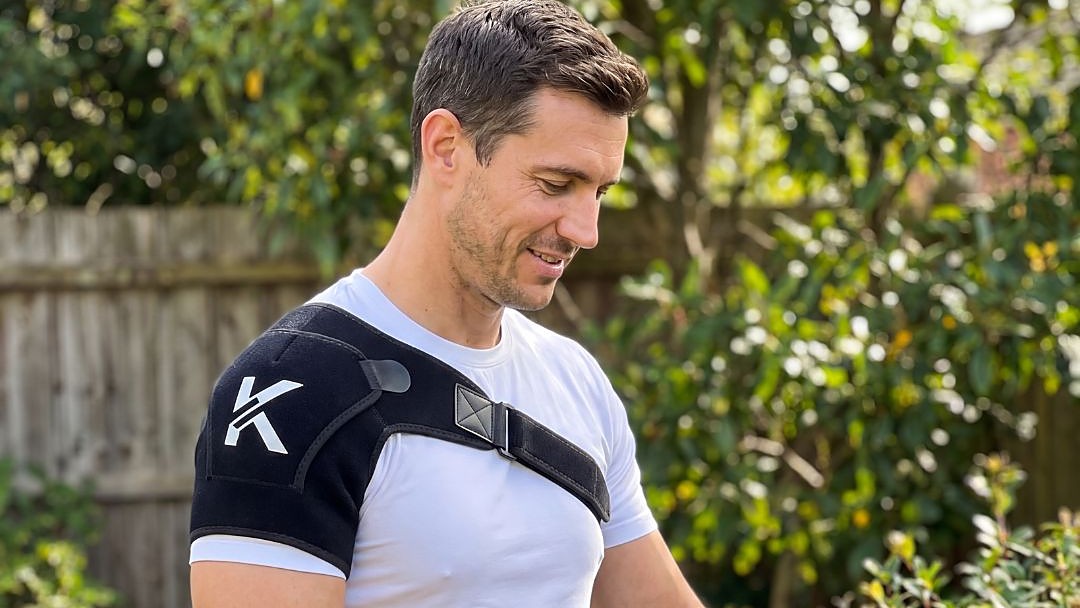
Mike pulled out his phone right there at the table and showed me the product page. A black compression brace that sits over the shoulder, with one strap across the chest and one around the upper arm. Nothing to swallow, nothing invasive. You just put it on.
Then he read me the details. One size with adjustable straps, it fits the left or the right shoulder, and there's a pocket built in for a hot or cold pack. You can wear it under a T-shirt or over one. I didn't say anything for a second.
"It's what I sleep in now," he said. "The compression gives the shoulder a snug hold, so when you roll over at two in the morning the joint isn't just hanging there getting yanked around. I put it on before bed and forget about it. Drug-free, and it takes about a minute to strap on."
I looked at him. "Mike, it's a strap. What's a strap going to do that a pillow can't?"
He just shrugged and kept scrolling. "Wear it to bed for two weeks and count how many times you wake up. That's the whole test. After that, the count will tell you more than I can."
I wasn't convinced. I'd already spent real money on pillows and a mattress topper that changed nothing by morning, and I'd stopped expecting much from anything with a product page.
But Mike had already texted me the link, so I ordered it that night.
The first nights, when 3AM stopped being a sure thing

The box showed up a few days later, which felt fast after eight months of waiting on my shoulder to sort itself out.
Inside was the brace and a short instruction sheet. It was lighter than I expected, soft black neoprene that felt more like a thick gym sleeve than a medical thing. Two straps, both adjustable, and that was it.
I braced for the usual story anyway: too hot to sleep in, too fiddly to adjust, me giving up on it by night four. Mike had just told me to try it before I talked myself out of it.
He was right. Over the shoulder, strap across the chest, then I snugged the arm strap and the chest strap until it felt firm but not tight. It took about a minute. When I lay down on my right side, the shoulder felt held instead of hanging, and I actually laughed.
I woke up once that night, around 4:30, rolled over and went back to sleep.
By the third night I caught myself not checking the clock at all, which hadn't happened in months.
No ibuprofen at midnight. No retreating to the recliner. Just a snug brace that kept doing its job after I fell asleep, which is exactly when I needed it.
I texted Mike at 6:45 the next morning: "Did I seriously just sleep past 3AM?"
He wrote back: "Told you. It's support that doesn't clock out when you fall asleep. That's why I still wear mine."
That evening I strapped it on before I brushed my teeth, like it was already a habit.
I felt... hopeful. Not fixed. Just less dread about the night ahead.
The difference was real.
That same morning I'd gotten up without that stiff, grinding first ten minutes, made the coffee before Jen did, and the heavy tired feeling I'd been dragging around for months finally started to lift.
I felt like a guy who might get his mornings back.
And that was NIGHT THREE.
Why it helped when pillows and painkillers didn't

A few weeks in I wanted to know why a strap was doing what nothing else had, so I called Mike and made him explain the whole thing.
What he told me honestly made me a little mad, mostly about the pillows and gadgets I'd bought that never had a chance of helping at 3AM.
Why the usual advice leaves you stuck at 3AM
Most of the time the answer is rest it, ice it, take something for it and give it time. That's a fair plan for the daytime, and I'm glad my doctor looked at my shoulder. But none of it does much for you at three in the morning, and whatever you took at bedtime has usually worn off by then.
The other route is the long one: physical therapy appointments, maybe a scan, maybe an injection, maybe a surgery consult down the line. All of that can be worth doing, but it takes weeks or months, and you still have to get through tonight.
So you're stuck between waiting and a process that moves at its own pace. In between, there was nothing that simply looked after the shoulder while I slept.
Why it hurts more at night
Mike explained it to me like this:
"During the day your muscles hold that joint in place without you thinking about it, and you protect it without noticing. Once you're asleep, most of that eases off. You roll onto the sore side, or the arm slumps forward across your chest, and the joint gets squeezed or pulled into an angle it hates. That's usually what wakes you up."
It made sense the second he said it. My shoulder was fine at my desk and awful in bed. A pillow changes how you lie down, but the shoulder can still slump and roll the minute you drift off.
Compression comes at it differently. The brace keeps a snug, steady hold on the joint all night, so the shoulder stays supported instead of flopping around every time you turn over. Kinetics designed it for that job: keeping the shoulder stable while you sleep.
Two straps, a minute to put on, and nothing to remember once the lights are off.
That's the difference between hoping tonight goes better and doing something about it before you lie down.
Steady compression that doesn't switch off when you do, on either shoulder, over or under a T-shirt.
What's actually in the box
For anyone wondering, this is what shows up at your door:
The Kinetics Compression Shoulder Brace, one size with an adjustable chest strap and bicep strap, made from 3D Advanced Compression Neoprene that stays flexible enough to move in and breathable enough to sleep in
Fits the left or the right shoulder, under or over a T-shirt, and if both shoulders give you trouble you can wear two at the same time
A built-in pocket for hot or cold packs, so you can slip in a Kinetics hot/cold pack (sold as an add-on) before bed, and the whole brace hand-washes with mild soap and air-dries
You strap it on before bed and let it do the holding. Right now it's on sale with free insured shipping, and Kinetics backs it with a 30-day money-back guarantee, subject to its returns conditions.
The Saturday I realized something had changed
About three weeks in, I woke up on a Saturday at 6:40 with sun coming through the blinds. I lay there a minute before it hit me: I hadn't seen 3AM.
And the odd thing is, nothing else was different. Same mattress, same pillow, same side of the bed I'd been dreading for months.
For once I wasn't lying there doing the math on how many hours I had left.
So I finally did the hedges I'd been putting off since spring, trimmers over my head and all, brace on. Two hours, and I didn't have to stop and shake the arm out once.
Around eleven my neighbor Ray wandered over to the fence with his coffee. He's retired, and he had rotator cuff surgery two years ago.
He's watched me wince my way through every yard job since last fall. He set his mug on the fence post and just looked at me for a second.
"Look at you," he said. "You look like you actually slept for once."
I laughed, louder than I expected to.
That was the moment it really landed for me.
It had been working for weeks before I stopped to notice. I'd spent so long bracing for the next bad night that a normal one felt strange. We stood there a while, and I let him ask, because honestly I wanted to tell someone.
Then he asked the question I still think about.
"So what changed? I had the surgery and I still wake up with mine."
"A Kinetics compression brace. I wear it to bed every night. Mike from breakfast put me onto it. It keeps the shoulder from slumping when I roll over."
"Text me that," he said, and pulled out his phone before I could. Two grown men talking shoulder braces over a hedge on a Saturday morning. That is exactly how it went.
"Jen must be happy."
"She says I've stopped groaning every time I roll over. I'll send you the link."
That night I put it on without thinking about it, and for the first time in months I wasn't nervous about going to bed.
Like I was getting my nights back.
What the first six weeks looked like
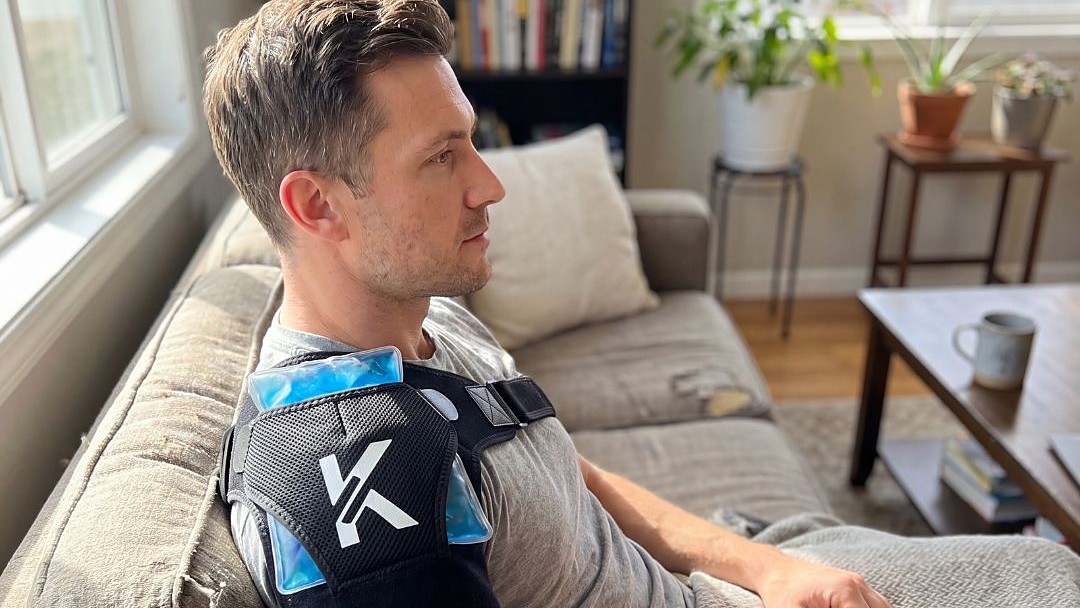
I wore it every night, and the change came gradually, week by week.
Night 1: Strapped it on before bed, chest strap first, then the arm strap. It felt snug and a little strange. I woke up once around 4:30 instead of three or four times, and I got back to sleep. No miracle, just a shoulder that stayed put when I turned over, which none of my pillows had managed.
Week 1: By the end of the first week I was waking up once a night, sometimes not at all. Mornings felt less like digging out of a hole. Nothing dramatic yet, but enough to keep going.
Week 2: I started slipping my old ice pack into the pocket for twenty minutes on the couch after dinner, then went to bed in the brace. Jen noticed first. She said I'd stopped flopping around like a fish.
Weeks 5 to 6: This is where it surprised me. I was sleeping through most nights, I had my patience back with the kids, and I threw batting practice without dreading that night's payback. Not the guy on his third coffee by two in the afternoon. Just me, rested and in a decent mood by breakfast.
The best part was how the small wins stacked up. One week a full night, the next an easy morning, then a whole weekend where I didn't think about my shoulder once. Over six weeks it helped my nights more than any pillow I'd bought.
The funny thing is I stopped monitoring myself. I put it on, turn off the lamp, and that's the end of it.
Almost nothing else about my routine changed. Same bed, same bedtime, one minute with two straps. And for once I wasn't dreading the night.
Why this rarely comes up at the doctor's office

This is the part that really gets under my skin:
When you mention night pain, the answer is almost always rest, ice, stretches and give it time. That's not wrong, and a doctor has a lot to cover in fifteen minutes. But you still go home and lie awake night after night while the frustration builds.
If something as simple as a brace you wear to bed can help keep the shoulder supported through the night, most of us would want to hear about it. And yet almost nobody mentions it.
Be honest. When did anyone last give you something to do about 3AM, instead of "just give it time"?
Most of the advice out there is built around your day: the stretches, the ice, the painkillers, the physical therapy. Very little of it is about what your shoulder is doing at three in the morning, which is exactly when mine hurt the most.
A nightstand full of things that were supposed to help.
Kinetics comes at it from a different direction.
One brace, on before bed, drug-free and non-invasive, aimed at what the shoulder does while you sleep. No prescription needed, and nothing to remember at midnight. You put it on and go to bed.
That's why the people I know who start wearing it tend to keep it on the bedpost, while the wedge pillows end up in the closet.
If you've never heard of it, that's not surprising. It isn't something that comes up in a fifteen-minute appointment. I only heard about it because Mike had lived through the same nights.
Mike put it to me plainly: "Nobody's going to write you a prescription for a brace to wear to bed. You kind of have to find it yourself, which is why I tell people."
Why starting sooner beats waiting
The line from Mike that stuck with me:
The sooner you start, the sooner your shoulder has some support at night, and the more decent mornings you get back. If you wait, you just keep watching the clock.
I'll keep it simple.
The whole thing is one minute before bed. Brush your teeth, strap it on, turn off the lamp. It keeps doing its job while you sleep, and you don't have to think about it.
But this is the part that really hit me: the clock keeps running either way.
Every week you put it off is another week of 3AM math, groggy mornings and snapping at the people you love.
And it doesn't take forever. Kinetics says most customers notice the support from the very first wear. For me it was the first night I woke up once instead of three or four times. But those nights only start adding up once you start.
Think about how long you've been telling yourself it'll settle down on its own. You keep saying next month, and then you look up and another season is gone and your nights feel exactly the same. Starting now is how you find out.
Believe me, I wish I'd started months earlier. I spent a long stretch just stacking pillows, swallowing ibuprofen and hoping.
I won't get those nights back. But my first night in the brace was the night the box arrived.
And more to the point: it could be on your bedpost within about a week, with plenty of nights ahead to see how your shoulder does.
And this is what happens if you keep putting it off:
In the next few weeks:
You keep waking up at the same hour, and every morning starts the same groggy way
You miss the better nights other people describe in their first week
The brace that could already be on your bedpost sits in a browser tab while the weeks pass
You tell yourself you'll order "once things calm down," and nothing changes
This time next year:
You're a year older and still telling yourself it's just your age
One tired month blends into the next because you're still waiting it out
Mike is still sleeping fine in his, and you still mean to order
You wait again, and another year goes by exactly like the last one
Nobody likes to admit this part:
Those are nights you don't get back, and the clock runs either way. The only question is whether your shoulder has any support while it does. One minute, two straps, every night.
But here's the good news: most orders ship within one business day.
The Kinetics brace is built for this. Snug compression neoprene, an adjustable chest strap and arm strap, one size that fits either shoulder, and a pocket for a hot or cold pack. That's how I went from counting hours at 3AM to sleeping till 6:40 that Saturday, without changing anything else.
Every night it keeps the shoulder supported while you get on with sleeping.
Nobody has to convince you that a full night's sleep matters.
So ask yourself: Do you want to find out over the next few weeks if it helps? Or look back next year still doing 3AM math?
And it's one small thing you can start the night it arrives.
I'm not saying this to scare you. I'm saying it because I wish Mike had told me about it months before that pancake breakfast.
The catch: it's a brace, not a miracle
It won't repair a torn tendon, and it doesn't replace your doctor. If your pain started with an injury, or comes with numbness or weakness, get it checked first.
What it does is simpler than that: it gives the shoulder a snug, steady hold through the night, which turned out to be the thing my nights were missing.
Mike's advice was simple: wear it every single night, not just the bad ones. If both shoulders give you trouble, Kinetics also sells it in packs of two and three, and you can wear two at once. Shipping is free and insured, orders usually go out within one to three business days, and delivery is two to seven days after dispatch.
Ray ordered his that same Saturday. Two weeks later his wife told Jen he'd stopped falling asleep in the recliner.
Mine hangs on the bedpost now, so I never skip a night. Ray keeps his on the hook behind the bathroom door. Between the two of us, we've got it figured out.
One last thing: it's on sale right now with free insured shipping, and every brace is backed by Kinetics' 30-day money-back guarantee, subject to its returns conditions.

Tap below to see today's price
SEE WHY PEOPLE SWITCH →- ✨ On sale now + free insured shipping
- 🌙 A compression brace you can sleep in, left or right shoulder
- 🛡️ 30-day money-back guarantee, conditions apply
What customers say about their nights
Real reviews from verified Kinetics buyers
Due to a torn rotator cuff, I have been having trouble sleeping at night. It was delivered in the evening and after opening it up, I read how to assemble it, put it on, and slept like a baby.
Years ago, I got into a car accident. My neck and shoulder hasn't been the same. ... I also use it when I go to bed. Sleeping it feels wonderful. ... I love the compression it gives. It's keeping my shoulder in place.
I bought this for my husband as he suffers from a lot of shoulder pain on a daily basis. He wore it to bed last night and he actually got some sleep! It seems to support his shoulder area which minimizes his pain.
If you've read this far, you deserve a full night's sleep
For eight months I watched the clock every night and told myself it was normal.
The 3AM math. The "give it a few months" from my doctor. The pillows and pills that did nothing for the part of the night that actually hurt.
But that Saturday, grinning at Ray over the hedge with my coffee going cold, I realized it was never about a miracle.
It was about giving my shoulder the support it was missing at night, so I could finally sleep like a normal person again.
For months I told myself this is just what 43 feels like and there's nothing to be done. I'd stopped expecting to sleep through the night.
Six weeks in, I was sleeping through most nights, waking up in a decent mood and throwing batting practice again. It all started the night I stopped waiting it out and finally did something about it.
- Choosing a selection results in a full page refresh.
- Opens in a new window.

- Choosing a selection results in a full page refresh.
- Opens in a new window.