
Rotator Cuff Pain: What Is Actually Happening Inside Your Shoulder, And What Usually Helps Before Anyone Mentions Surgery

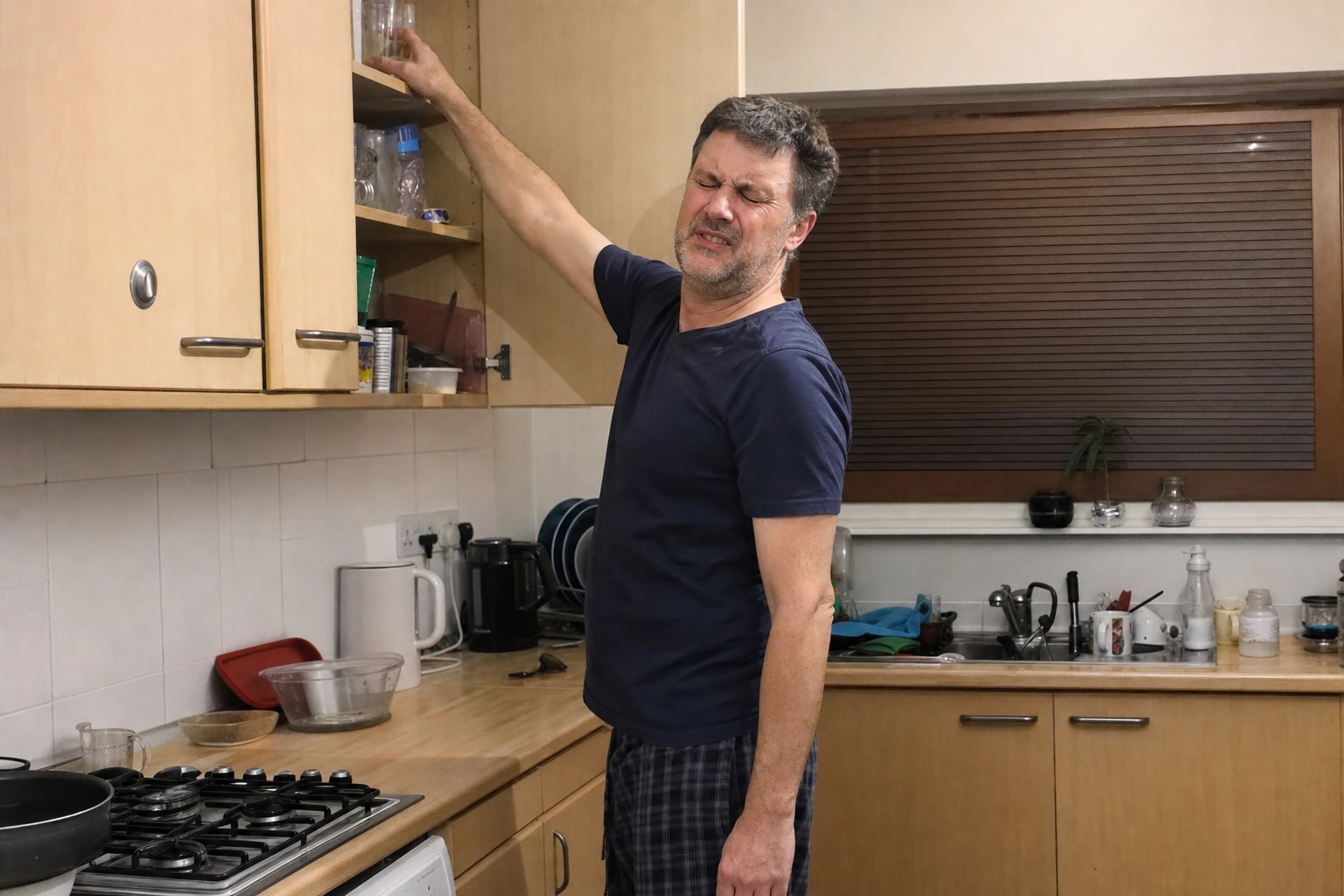
Rotator cuff pain usually shows up in ordinary movements first
"Most people never think about the rotator cuff until the day it stops letting them sleep on that side."
If you are reading this, you probably already know the name. Maybe a doctor used it. Maybe you looked it up at two in the morning after being woken by your own shoulder again. Either way, rotator cuff pain has a way of turning ordinary movements into things you plan around.
Reaching into the back seat. Fastening a seatbelt. Getting a coat on. Washing your hair. None of it is dramatic, and all of it starts to hurt.
What catches people out is how long it lingers. A pulled hamstring settles in a couple of weeks. A shoulder can grumble on for months.
There are reasons for that, and they are worth understanding before you decide what to do about it.
This article covers what the rotator cuff actually is, what tends to irritate it, and which non-surgical options are usually tried first. It is general information, not medical advice, and it is no substitute for seeing a physiotherapist or a doctor.
It is the explanation I wish someone had given me in plain language, without the cross-section diagram I could not read.
"The shoulder is the most mobile joint in the body. That mobility is exactly why it is so easy to irritate."
That one fact explains most of what follows. Almost every other joint in the body trades movement for stability. The shoulder does the opposite, and a small group of muscles is left holding it together.
"The joint gives you the range," as one physiotherapist put it to me, "and the rotator cuff pays for it."
So that is where we will start, with what those muscles are and what they are doing every time you lift your arm.
"Understand the cuff, and the rest of it stops feeling random."
What the rotator cuff actually is, and why it takes so long to settle

The rotator cuff is not one thing. It is a group of four muscles and their tendons that wrap around the top of the arm bone and hold it in the shoulder socket. They sit underneath the larger shoulder muscles, they are small, and their job is control rather than power. We will come back to supportive bracing later, once the causes are clear.
The four are supraspinatus, infraspinatus, teres minor and subscapularis. Together they form a cuff of tendon over the head of the upper arm bone, holding it centred in a shallow socket while the bigger muscles do the lifting.
When one of those tendons gets pinched, frayed or inflamed, the shoulder loses some of that centring. The joint still moves, but it moves slightly wrong, and tissue that is already irritated gets irritated again on the next lift. That loop is why shoulders drag on.
Blood supply is the other half of it. Tendon has a much thinner blood supply than muscle, so repair is slow even when you are doing everything right. This is not a sign that something is badly wrong. It is how the tissue works.
None of which means it will not settle. It means the timeline is measured in weeks and months rather than days, and that how you use the shoulder in between matters more than most people expect.
What actually causes rotator cuff pain

Desk posture is one of the most common aggravating factors
Rotator cuff pain rarely has a single cause. It is usually a few things stacking up over years, and then one ordinary movement that gets the blame.
Overuse is the most common. Painting a ceiling, swimming, racket sports, or a job that keeps your hands above shoulder height will all load the cuff over and over. The tendon copes well with load. It copes badly with load that never lets up.
Age is the second. From around forty, tendon tissue gradually loses elasticity and its blood supply thins further. Scans of people with no shoulder pain at all often show partial cuff tears once they are past sixty, which tells you something useful: a tear on a scan is not automatically the source of the pain.
Posture matters more than it gets credit for. Hours rounded forward over a desk or a phone tips the shoulder blade into a position that narrows the space those tendons pass through. Less space means more rubbing on every lift.
"It sounds too simple," a physio told me, "but plenty of shoulders start hurting because of where they spend the working day, not because of anything that happened at the weekend."
Then there are the tears themselves. Most are partial rather than complete, and the majority are managed without an operation.
Sleeping position feeds into all of it. Lying on the affected side compresses the joint for hours at a stretch, which is why so many people find the pain is at its worst overnight and first thing in the morning.
Frozen shoulder, bursitis, tendonitis and impingement tend to come up in the same conversation. They are different problems, they overlap, and they can appear together, which is part of why working it out yourself is unreliable.
The practical takeaway is that a lot of rotator cuff pain is irritation rather than damage, and irritation responds to changing the conditions around it.
Which is where the conservative options come in.
Almost everyone starts with the same short list.
The non-surgical options most people try first

Rest comes first, and it is the one people get wrong. Rest does not mean a sling and six weeks of stillness, which tends to stiffen a shoulder rather than settle it. It means backing off the movements that provoke it while keeping the joint moving gently through the range that does not hurt.
Ice and heat come next. Ice helps in the first few days, when the shoulder is angry. Heat is usually more useful after that, before movement, to loosen a joint that has stiffened overnight. Neither fixes the underlying problem, and both make the day more bearable. Later on, compression and support tend to enter the picture for the same reason.
Physiotherapy has the strongest track record for cuff problems. A good programme is unglamorous: specific, gradual loading of the muscles that hold the joint centred, done consistently for a couple of months. The catch is cost and consistency. Sessions add up, and home exercises only work if they actually get done.
Painkillers and anti-inflammatories have a place for short stretches. They are not a plan. They manage the signal rather than the cause, and long-term use brings problems of its own, which is why most people would rather not lean on them indefinitely.
Injections sit further along. They can quiet an inflamed shoulder for weeks or months, and they are usually offered once other things have not worked.
Surgery is the end of the list rather than the start of it. For most partial tears and most impingement, it is not the first recommendation anyone makes.
That leaves a gap in the middle, and it is the gap people tend to find on their own: something to wear that keeps the joint supported through an ordinary day, when you cannot stop using the arm and you are nowhere near booking an operation.
That is the category compression bracing sits in.
It is worth being precise about what a brace does and does not do, because vague expectations are where most of the disappointment comes from.
A brace does not repair a tendon. What it does is hold the joint in a more stable position, apply steady compression, and take the edge off the end-range movements that tend to provoke the pain.
For a lot of people, that combination is the difference between getting through the day and planning the day around one shoulder.
What changes when the shoulder is properly supported
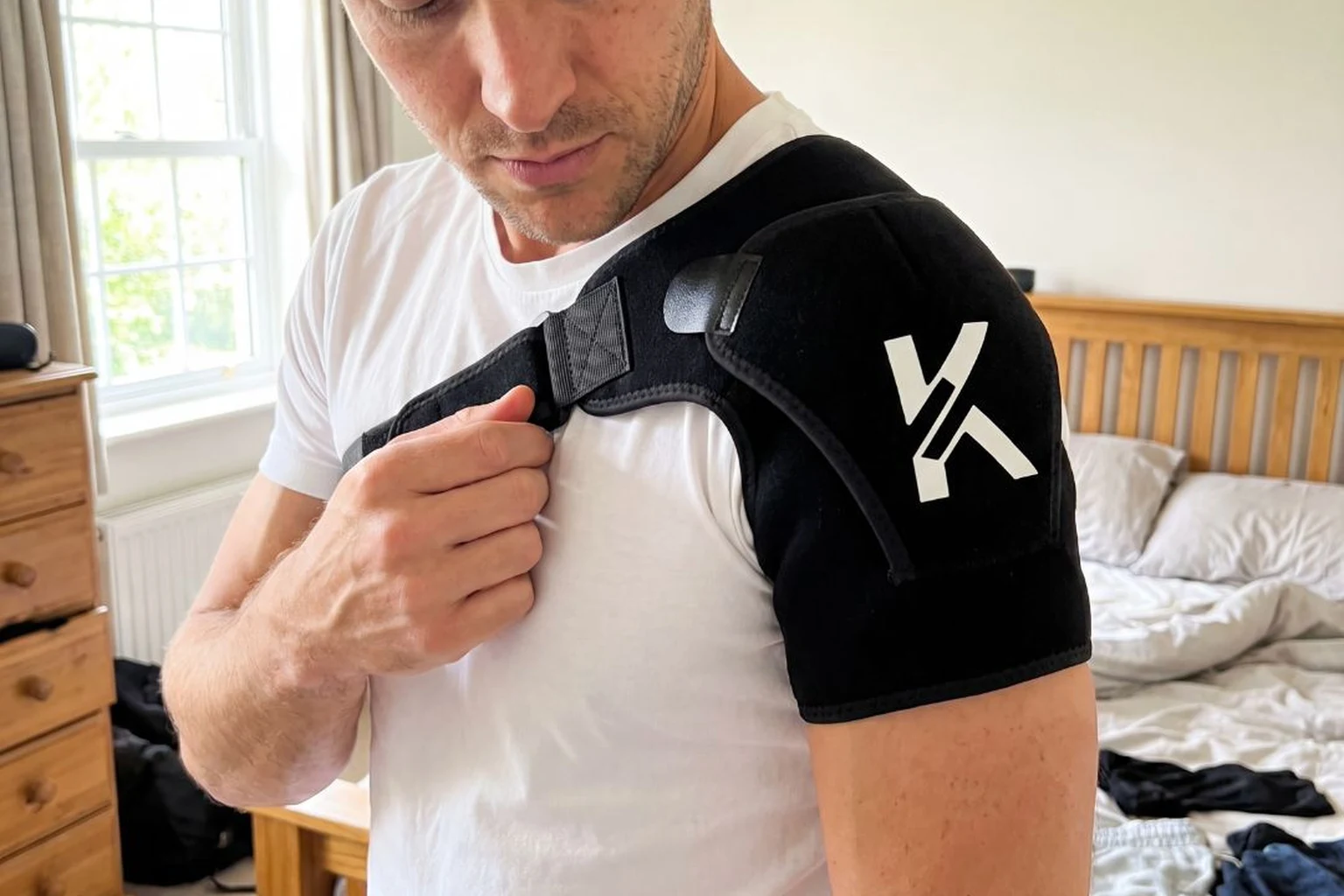
Results may vary from person to person
The first thing most people describe is not pain relief. It is that the shoulder feels held.
Compression around a joint improves what physiotherapists call proprioception, your sense of where the limb is in space. A supported shoulder tends to get used a little more carefully without you having to think about it, and that is often what breaks the flare-up cycle.
"It was not that the pain vanished," one long-term wearer said. "It was that I stopped doing the thing that set it off twenty times a day."
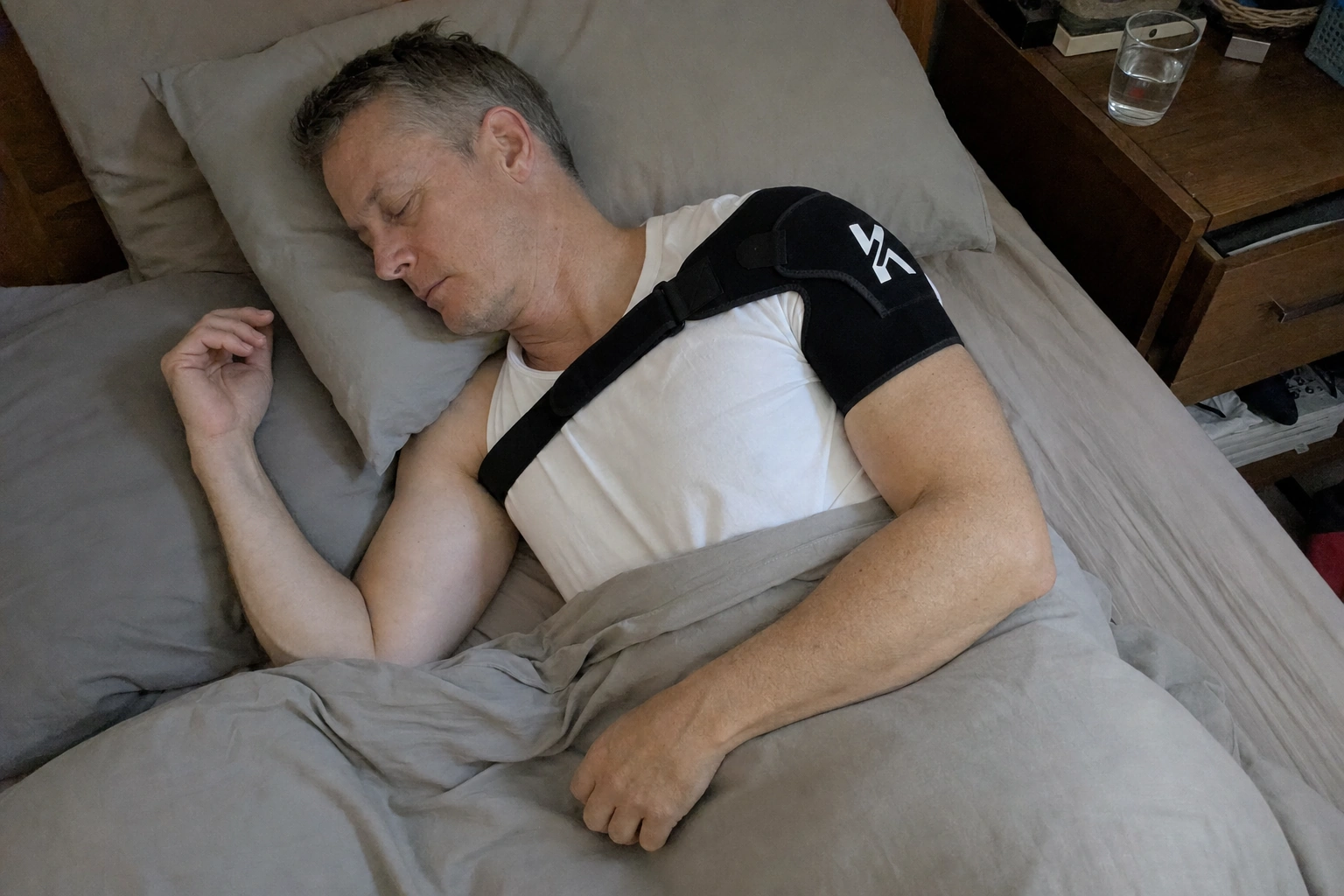
The second is sleep. Because the pain is so often worst at night, keeping the joint stable through the hours you are not in control of it is where many people notice a difference first.
The brace that keeps coming up in this context is the Kinetics Compression Shoulder Brace. It is a black neoprene shoulder wrap with an adjustable chest strap and a bicep strap, built from what the company calls 3D Advanced Compression Neoprene, chosen for flexibility and breathability rather than bulk.
It fits either shoulder, it is one size with adjustable straps, and it has a built-in pocket that takes a hot or cold pack, which folds two of the earlier options into something you are already wearing.
"It is not a cure," as one reviewer put it. "It is the thing that lets you keep working while the shoulder settles down."
Kinetics says it is designed to be worn while working out, through the day and during sleep, which is the part that matters most if nights are your problem.
The company describes it as suitable for rotator cuff tears, frozen shoulder, bursitis, dislocated AC joint, labrum tears, tendonitis, impingement syndrome, arthritis and sprains, and quotes Dr. Michael Carter, an orthopedic specialist at Summit Sports Medicine, who says he recommends it to patients with shoulder pain and mobility issues as a non-invasive alternative to pills and surgery.
Whether it suits your shoulder specifically is a question for you and whoever is treating it. The product page sets out what it is designed for and what it is not.
The part that actually matters day to day

Results may vary from person to person
The measure that counts is not a number on a pain scale. It is whether you can do small things again without planning around them.
Raking leaves. Reaching a top shelf. Sleeping a full night on the side you prefer. Carrying the shopping in with the arm that hurts.
Those are the things people mention when a brace is working for them, and they are exactly the things that quietly disappear when a shoulder has been bad for months.
There is a psychological piece to it as well. Persistent shoulder pain makes people protective. You brace before you reach, you hold the arm in closer, you use the other side for everything. That guarding becomes its own problem, because the muscles that hold the joint centred get weaker while you avoid using them.
"The support is what let me stop guarding," one reviewer wrote, "and once I stopped guarding, I started using the arm normally again."
That is the loop worth breaking. Not because a brace is a treatment, but because a shoulder being used within a comfortable range generally does better than one being protected out of the picture entirely.
It is also why fit matters more than branding. A brace that is uncomfortable, that rides up, or that traps heat is a brace that ends up in a drawer.
The Kinetics version adjusts at the chest and the bicep, and it is thin enough to wear under a shirt, which is the main reason people give for actually keeping it on.
Wearing it over clothes works too, which sounds like a small thing until you are trying to get through a working day in an office.
"The best brace is a slightly awkward truth," a physio told me. "It is whichever one you will still be wearing in a month."
If you are weighing it up, the next two sections cover what a shoulder brace can reasonably be expected to do, and where this one comes from.
Why compression and support help a shoulder that will not settle
It is worth separating the mechanism from the marketing, because a shoulder brace is a simple object and the reasons it helps are simple too.
There are a handful of them, and none require you to believe anything unusual.
Here is what each one is actually doing.
It limits the movements that provoke it: most cuff pain has a few specific positions that set it off, usually reaching behind you or above your head. A brace does not stop you moving. It adds resistance towards the end of the range, which is often enough to prevent the twenty small provocations that happen in a day.
It applies steady compression: compression around a joint supports the soft tissue and sharpens your sense of where the arm is, so the shoulder gets used more carefully without any conscious effort on your part.
It keeps the joint stable overnight: night pain is the most common complaint with cuff problems, because lying on the joint compresses it for hours. Support through the night is the single reason many people persist with a brace at all.
It carries hot or cold therapy: the Kinetics brace has a pocket built in for a hot or cold pack, so the thing holding the joint is also the thing delivering the therapy, rather than two separate jobs.
What it does not do is rebuild a tendon. That comes from time and from loading the muscles properly, which is what physiotherapy is for. A brace makes the weeks in between more manageable and stops the daily aggravation that keeps resetting the clock.
Real Relief. Real Results.
These are verified reviews left by buyers on the Kinetics product page, copied word for word, spelling and all. Each one runs the reviewer’s own headline straight into their review.*
None of them are dramatic, which is rather the point. The wins people report with a brace are small, practical and specific.
"So comfortable I forget I'm wearing it. The shoulder support alleviates the pain. When l wear it l can do tasks like raking leaves, etc. Without it l could not do my normal " duties". It is comfortable to wear, there's enough stretch to allow for normal motions. Definitely worth the money."*
James D. · Verified Buyer
"No more waking up in pain. I bought this for my husband as he suffers from a lot of shoulder pain on a daily basis. He wore it to bed last night and he actually got some sleep! It seems to support his shoulder area which minimizes his pain. I definitely would recommend this product!"*
Clara S. · Verified Buyer
"Fully adjustable, perfect fit. I wore it for five weeks over a tee shirt and it gave me the support I needed to help heal a labrum tear. I even slept with it and it was fine. Easy to adjust. There is more wiggle room for chest adjustment than for the bicep adjustment, so ensure it fits your bicep first."*
David P. · Verified Buyer
Where the Kinetics brace comes from, and what is included

Results may vary from person to person
One warning that applies to the whole category. Shoulder braces are easy to copy, and the marketplaces are full of thin versions with weak straps that stretch out inside a fortnight. If you buy one of those, feel nothing, and conclude that bracing does not work, that is not the approach failing you. That is the product.
The one described here is the Kinetics Compression Shoulder Brace, made from 3D Advanced Compression Neoprene and sold through the company's own site rather than through marketplaces.
What comes with it:
- ✅ One size, fully adjustable at the chest and bicep, and it fits either the left or the right shoulder
- ✅ A built-in pocket that takes a hot or cold pack, so heat and ice work with the brace still on
- ✅ Lightweight breathable neoprene, thin enough to wear under a shirt or over clothes
- ✅ Free insured shipping, and a 30-day money-back guarantee if it does not help
Kinetics says most customers notice better support from the very first wear, and that consistent daily use is what improves mobility and posture over time. The 30-day window gives you long enough to find out on your own shoulder before you commit.*
👉 VIEW THE KINETICS BRACE »Before you decide

Shoulder pain is one of the few complaints where waiting has a real cost, because the guarding and the disuse quietly weaken the joint while you put off doing anything. Kinetics is one option within supportive care, and it is not the only one.
If you are already seeing a physiotherapist or a doctor, it is worth asking whether a compression brace fits alongside what you are already doing. Most of them will have a view, and it is a short conversation.
If you are not, and you have been managing this yourself for months, a brace is one of the cheaper and lower-risk things to try before the conversation turns to injections or surgery.
Current pricing, sizing details and the guarantee terms are all set out on the product page.
Note: Kinetics sets its own pricing and shows it in your local currency, so check the figures on the product page rather than relying on numbers quoted anywhere else. Free insured shipping and the 30-day money-back guarantee were both listed at the time of writing.